Facial Features in English for Kids
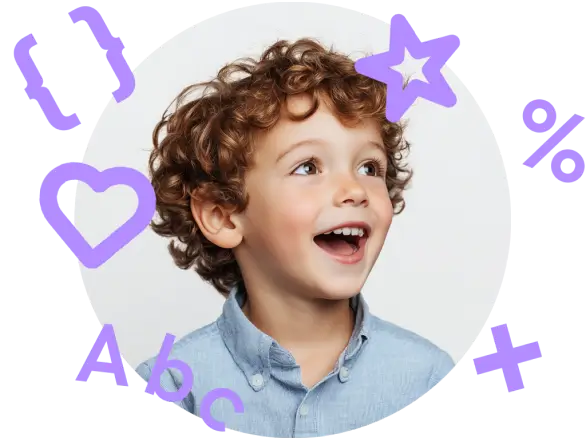
Facial features are visible parts of the face: eyes, nose, mouth, cheeks, and chin. Children can begin with 12 core words, then describe position, colour, shape, and expression. Facial Features in English for Kids: Vocabulary and Activities moves from pointing and naming to full sentences. The aim is to understand descriptions, discuss faces respectfully, and practise vocabulary through games, stories, drawings, and conversation.
Core Words and Phrases to Teach First
For Facial Features in English for Kids: Vocabulary and Activities, start with features your child can point to. Teach four or five at a time, then introduce another group while reviewing earlier words through short games.
The table provides a first set. Say each word, point to the feature, and invite your child to copy the action before forming a sentence.
Introduce freckles, dimples, wrinkles, beard, and moustache after the core set. Hair often appears in face descriptions but is not a facial feature. The distinction helps older children sort vocabulary by category.
Using Facial Feature Words in Sentences
When practising Facial Features in English for Kids: Vocabulary and Activities, progress from words to patterns. After pointing and saying “nose,” try “This is my nose.” Next, extend it to “My nose is between my eyes and mouth.”
Use have with I, you, we, and they; use has with he, she, and it. These patterns support early descriptions.
Keep descriptions neutral and kind. Words such as round, wide, dark, or light describe features without ranking them. Faces differ within every family and community. Drawings, puppets, and invented creatures support practice without judging anyone’s appearance.
Activities for Different Ages
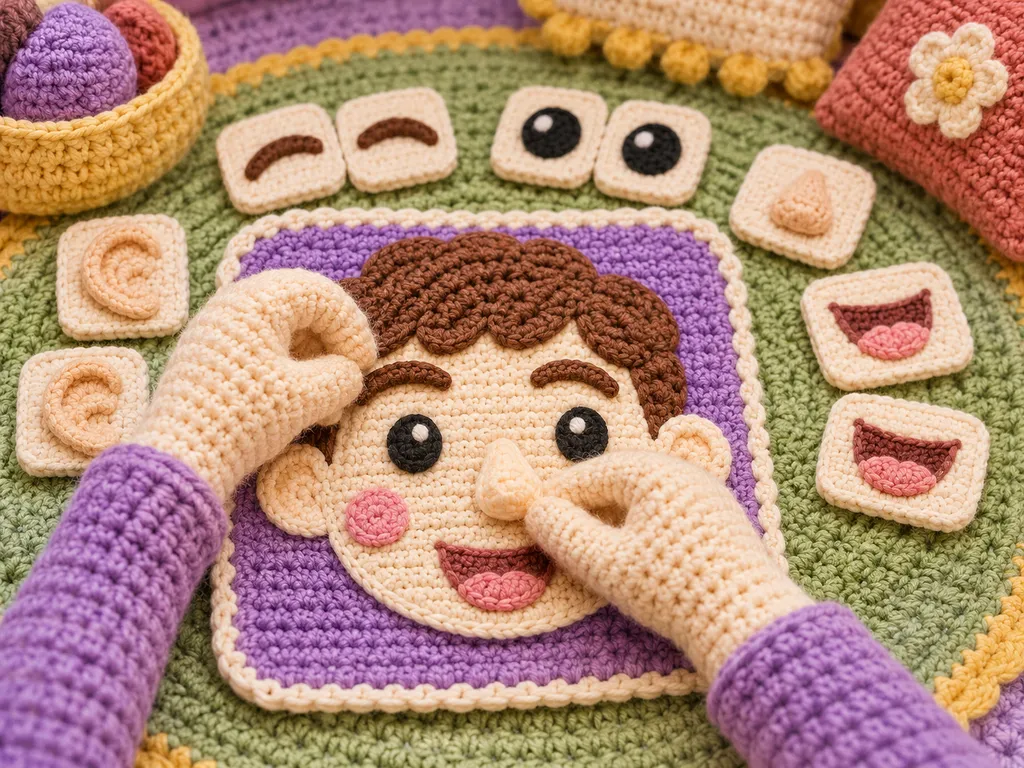
Effective Facial Features in English for Kids: Vocabulary and Activities sessions match attention span and language level. Young learners need movement and repetition; older children can follow clues, give detailed descriptions, and complete creative tasks.
For school-age kids, play “Point and say.” Call out “eyes,” “chin,” or “cheeks” for your child to touch. Reverse roles so your child gives the instruction. Draw a large face together, adding one feature after each spoken word.
For school-age kids, set a draw-and-label challenge. Your child draws a person, animal, or friendly creature and labels six to ten features. Then create a character file with full sentences: “The character has thick eyebrows, a small chin, and a scar beside one eye.” Use the description in a comic, mystery, or game profile.
Simple Ways to Practise at Home
Connect Facial Features in English for Kids: Vocabulary and Activities to brief routines. Two focused minutes at the mirror can beat one long vocabulary session. During the week, review words through speaking, listening, reading, and drawing.
Listen, Draw, and Check
Give three instructions: “Draw two large eyes. Add a small nose. Put freckles on both cheeks.” Your child follows without a model, reads the instructions back, and checks the picture.
Try a guessing game. One person describes an invented face while the other asks: “Does the character have curly hair?” or “Are the eyebrows thick?” Limit each round to five clues, forcing the speaker to select precise details.
In 1-on-1 online lessons, our experienced tutors can adapt tasks to age and speaking level. A beginner may point and name features; a confident learner can explain expressions, compare character designs, or give precise drawing instructions.
Common Mistakes and How to Correct Them
Children often mix singular and plural forms. We speak about two eyes, ears, eyebrows, and cheeks, but one nose, mouth, chin, and forehead. The plural of tooth is teeth, not tooths. Review pairs such as “one tooth, two teeth.”
English adjectives normally precede the feature: “brown eyes,” not “eyes brown.” After be, they follow it: “Their eyes are brown.” Model the correct sentence, then ask your child to repeat it with one new detail instead of explaining grammar at length.
Children may confuse has and have. Display two frames: “I have blue eyes” and “She has blue eyes.” For difficult pronunciation, slow the word without adding sounds, then resume natural speech: “mouth,” not “mouth-uh,” and “nose,” not “no-se.”
- Point to five facial features and ask your child to name each aloud.
- Model “eyes,” “ears,” and “eyebrows,” emphasizing plural endings through slow repetition.
- Compare one eye with two eyes using a mirror and simple sentences.
- Draw a face together, then label six features with sticky notes.
- Revisit mistakes by praising correct words and gently repeating the complete sentence.
When a word has several meanings or pronunciations, Cambridge Dictionary is a useful check before turning it into child-friendly examples.
Frequently Asked Questions About Facial Features
These answers address frequent questions about teaching facial feature vocabulary at home.
How Many Facial Feature Words Should a Child Learn at Once?
For Facial Features in English for Kids: Vocabulary and Activities, four or five new words per session is a sound starting point. A younger beginner may need only three. Review through pointing, drawing, and short sentences before adding words. Move on when your child understands them without watching you first and uses some independently.
Should My Child Say “Eye” or “Eyes”?
Use eye for one eye and eyes for both. The rule applies to ear and ears, eyebrow and eyebrows, and cheek and cheeks. Teach phrases such as “Close one eye” and “My eyes are brown,” linking number with meaning.
Can a Multilingual Child Learn These Words Without Translation?
Yes. Pointing, mirrors, drawings, gestures, and pictures show meaning without translation. Translation remains acceptable when it prevents confusion. Afterwards, ask your child to use the English word in an action or sentence. The task is connecting a familiar idea to its new English form.
What If My Child Feels Shy About Describing Faces?
Begin with puppets, animals, book illustrations, or invented characters instead of people. Let your child describe one feature at a time without interruptions. Model the complete form afterwards: “Yes, the creature has three green eyes.” Focus on precise language and respectful observation, not whether a feature looks attractive or unusual.
Start your child's English journey today — book a trial lesson with LearnLink.
Stay updated on our latest tips and resources by following us on Instagram LearnLink.